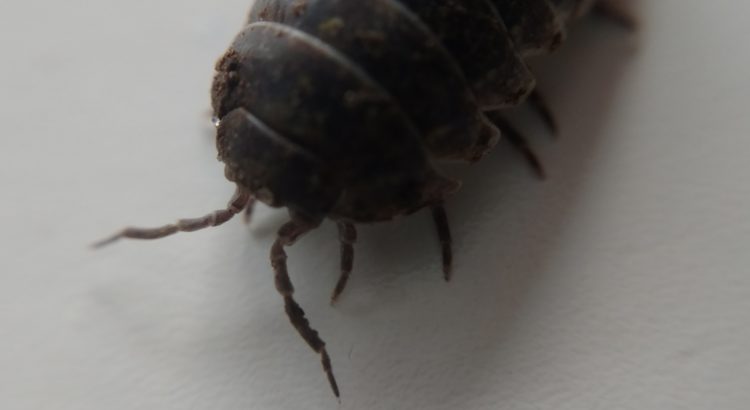
You may have recently acquired an invertebrate pet but sometimes these creatures may begrime their enclosures and force you to hand clean their tank. Or mold may grow from decomposing food. There is a great way to prevent this from occurring, which is the presence of a ‘clean up crew’ in the environment. The essential parts of the clean up crew are isopods and springtails (some bioactive enclosures may contain earthworms, beetles etc.) Springtails can break down smaller uneaten food items (and waste), and isopods can decompose slightly larger food items (and other forms of waste). This safes you, the owner, from having to manually clean the tank. For isopods, there is many variants such as Tropical Grey, Giant Orange, Dairy Cow and much more, these variants may persuade you to introduce a colourful, exotic species. Or keep another tank for these fascinating critters! I will review a select few of species and their effectiveness at cleaning in this page. Without further-ado I will first present springtails as an option!
Springtails (Folsomia candida) are small (1-4 mm), white hexapods which feed on decomposing organic matter. They are cheap, easy to culture and sold widely in pet stores. They specialize in removing smaller quantities of unwanted food – this can be anything; they will eat vegetables, fruits, and mold. Introduce a large amount to take care of most waste. To culture them, typically have charcoal for a substrate, and rice as a food, the population should boom. You can also try coco fibre with fruit or mushrooms – which they seem to enjoy very much. Dump some charcoal pieces into a terrarium and mix the charcoal into the substrate as these arthropods often spend their time underground and are not seen too often. They have adaptable environmental conditions. They have no morphs unlike isopods. Now, it’s time for isopods!
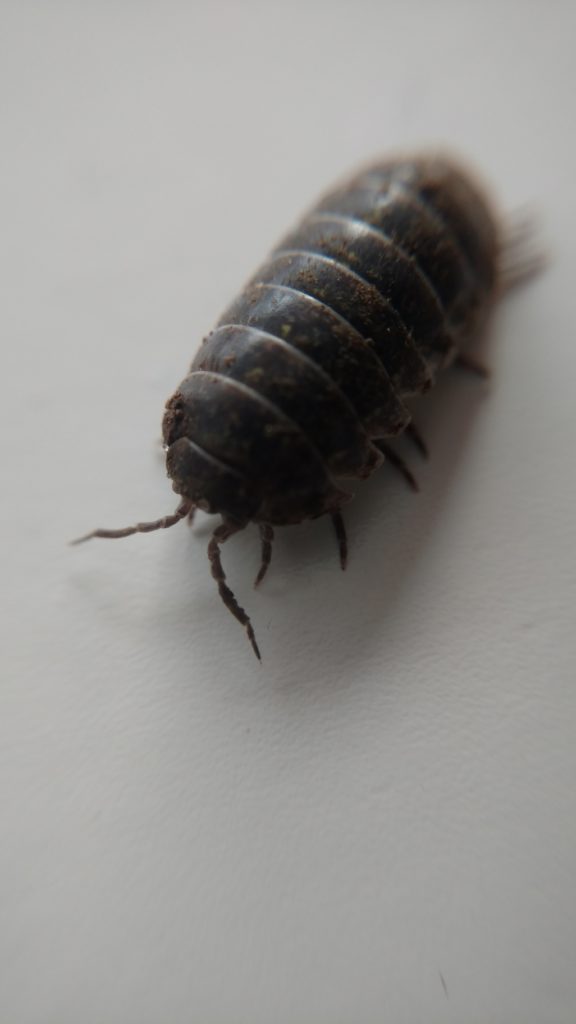
There is a very large range of isopods. They take care of waste products and remove foods. They can be kept in a container, starting with around 10 (dependent on the species), bark, leaves and substrate such as organic compost or sphagnum moss. Environmental conditions vary depending on the species so we’ll start with the white dwarf isopod (Trichorhina tomentosa.) This isopod is miniature (2-3 mm) which makes them great for people who prefer not to see their clean up crew. It reproduces parthenogenetically, which means females do not need males to reproduce – meaning a colony is composed of only females. They suit 26C to reproduce at an accelerated rate, but will suit room temperature comfortably. Humidity is higher than most pill bugs at 80-90%. Giant Orange Isopods (Porcellio scaber) is another great choice, though significantly larger at 1.8 cm. They are a larger species and are orange in colouration. The temperature ranges from 18C-22C and humidity is slightly lower (though not majorly) at 70-80%. Armadillidium maculatum is the Zebra isopod which is definitely a suitable name for this arthropod – which has white stripes on a black body! These are a large and active species, but reproduce slower than other isopods. They breed well at 23C-29C and prefer coconut coir and peat moss as a bedding as isopods feed on the substrate, mainly. Due to the fact that this species is a pill bug, it needs to be somewhat moist but not too humid – preferably 60%. When they are in the terrarium with the invert, I would supply them with more food as they may resort to chewing on a freshly molted invert. The final isopod I will show you is less of a cleaner but more a display invert. It is armadillidium montenegro, the clown isopod. It is adorned with colourful yellow spots, three rows of white spots and a red overall colouration. They breed at high temperatures from 26C to 35C! Keep around 75% of the habitat dry but provide a retreat which is more moist. This species is large and love fish flakes! Conclusively, I believe that dwarf whites are the best cleaners if you do not want to see the isopod, but porcellio scaber (Giant Orange) are a better option for cleaners that are more visible. Some of the others like the clown isopod are almost exclusively for display. Hope you can culture yours!